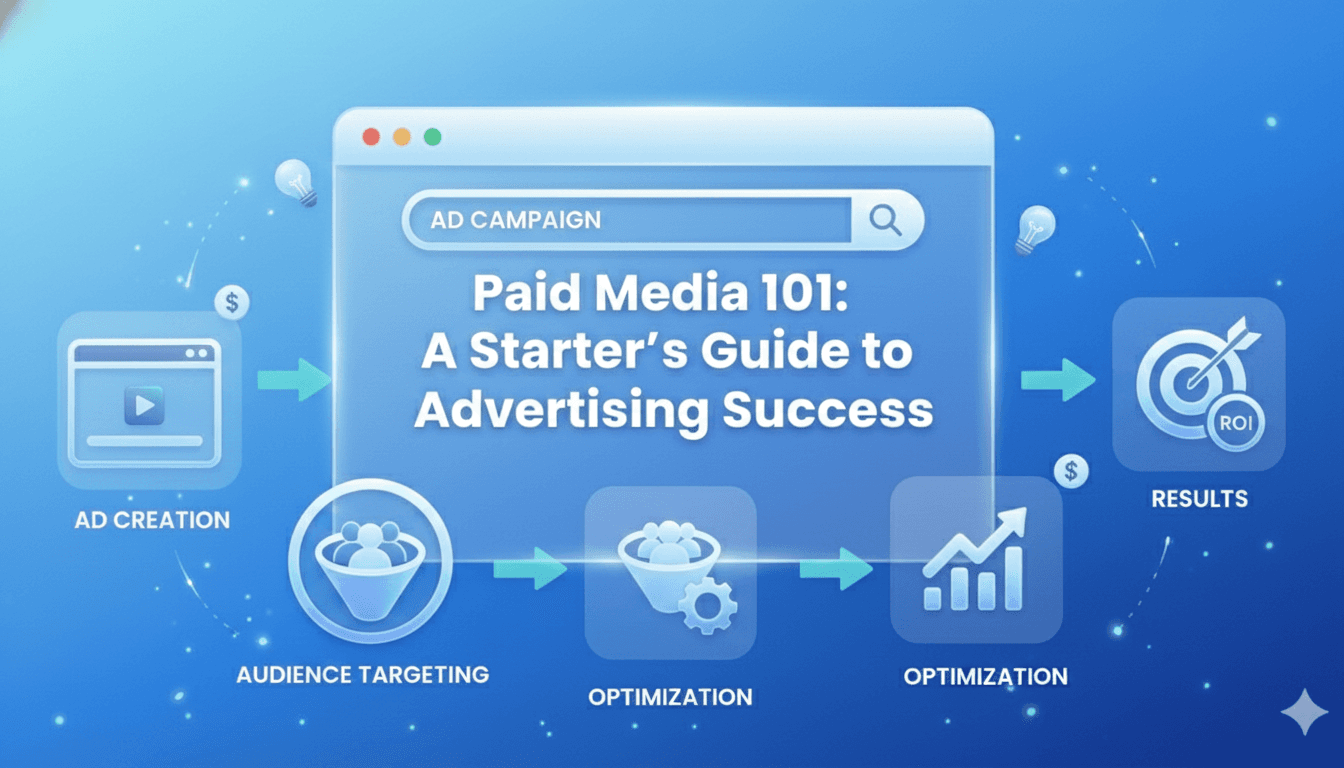
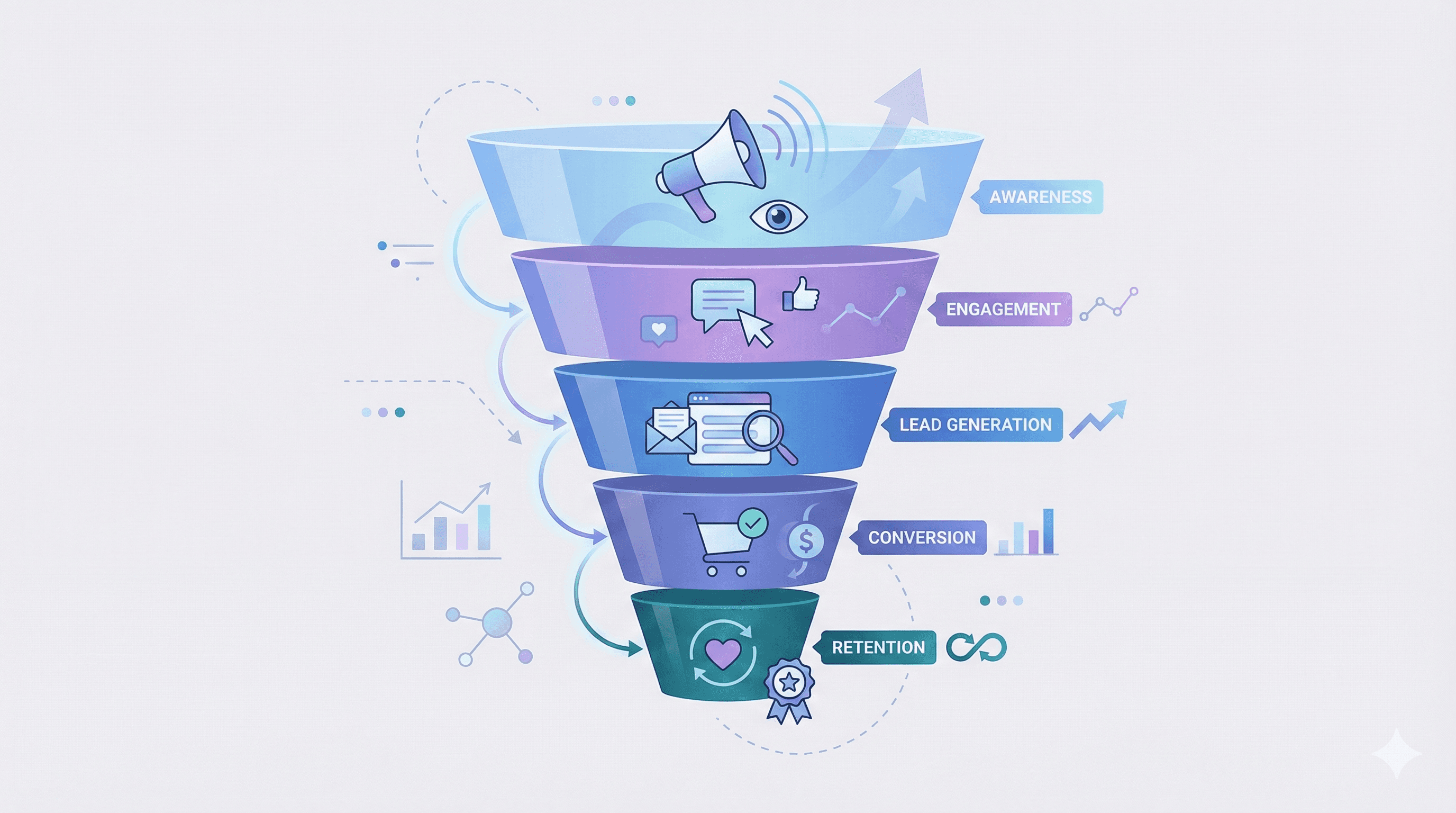
Diversify or Die: A Cross-Platform Paid Media Strategy Beyond Google and Meta
Depending on Google and Meta isn't a paid media strategy — it's a supplier relationship where you hold no leverage. This pillar reframes paid media as an interconnected growth ecosystem, introducing the Direct Response Death Loop and the Refinity Intent Amplification Framework™ for building a diversified, compounding acquisition system.


Two platforms now sit between most companies and their customers. Google and Meta absorb the majority of digital ad budgets because they work — they are the most measurable, most liquid, most defensible acquisition channels ever built. That is exactly why depending on them is dangerous.
When a single vendor controls your unit economics, you don't have a paid media strategy. You have a supplier relationship, and you're the one without leverage. Every CPM increase, every attribution change, every algorithm update lands directly on your CAC with no buffer. The teams that feel this most acutely are the ones that optimized the hardest: they squeezed every point of ROAS out of two platforms and woke up to find efficiency quietly eroding for reasons entirely outside their control.
The argument of this piece is straightforward and, for most growth leaders, uncomfortable. Modern paid media success does not come from maximizing the ROAS of individual campaigns. It comes from building an ecosystem — an interconnected system where each channel does a specific job, each campaign strengthens the next, and the business owns the audience assets that make future acquisition cheaper. Diversification isn't a media-planning preference. It's risk management for the single most important number in your P&L.
Most teams don't arrive at concentration by choice. They're pulled there by a pattern we call the Direct Response Death Loop — a self-reinforcing cycle that feels like discipline while it slowly strangles growth. Understanding that loop is the prerequisite for everything that follows.
The Direct Response Death Loop

The Death Loop is what happens when a paid media program optimizes exclusively for immediate conversion and treats every other outcome as waste. It's not a strategy anyone chooses. It's an emergent behavior that platform incentives, reporting dashboards, and quarterly targets produce automatically. Here's how it tightens.
It starts with a rational instinct. You optimize toward the campaigns and audiences that convert now. The platform rewards you with efficient results, so you double down. Budget shifts toward bottom-funnel, high-intent inventory — branded search, retargeting pools, lookalikes seeded from recent purchasers.
Then audiences narrow. Optimizing for immediate conversion pushes spend toward the smallest, warmest segments — the people already most likely to buy. This looks like precision. It's actually contraction. You're not creating demand; you're harvesting it faster.
Dependence on remarketing rises. Retargeting posts the best-looking ROAS in the account because it re-sells people who were already going to convert. Attribution hands those conversions to the retargeting line, which justifies more retargeting budget, which requires a steady inflow of new prospects to work — the very inflow you've been defunding.
Demand generation gets cut. Upper-funnel spend can't show a clean, last-click return, so it dies first in every budget review. The engine that fills the top of the pool goes quiet.
Short-term efficiency metrics become the only scoreboard. ROAS and CPA are reported weekly; brand equity, audience size, and future pipeline are not. What gets measured gets funded, so effectiveness loses to efficiency every time they compete.
Now the loop closes on itself, and the symptoms compound:
- Rising acquisition costs. You and every competitor are bidding on the same shrinking pool of in-market buyers. Auction density goes up, CAC follows.
- Audience fatigue. The warm segments you keep re-serving have seen the offer. Frequency climbs, response falls.
- Creative fatigue. Narrow audiences burn through creative faster because the same people see the same ads on repeat.
- Platform dependence. With demand-gen gone, the platform's warm audiences are the only thing keeping numbers alive — so you can never leave, and you can never negotiate.
- Declining marginal returns. Each additional dollar buys a slightly less-likely buyer than the last. The account looks efficient on average while every marginal dollar quietly underperforms.
The cruelest part of the Death Loop is that the dashboards look good the whole way down. Blended ROAS holds up because retargeting flatters the average. By the time the decline is undeniable in the aggregate numbers, you've spent quarters hollowing out the demand that made the account work in the first place.
The misconception underneath all of this: treating harvested demand as if you created it. Retargeting and branded search don't generate customers — they collect customers other activity generated. A program that only harvests will eventually run out of things to harvest. Breaking the loop means rebuilding the parts of the system that create demand and capture it into assets you own — which requires diversification, and a clear-eyed reason why.
Why Paid Media Diversification Matters More Than Ever

Diversification usually gets pitched as "be everywhere," which is both expensive and wrong. The real case for a diversified paid media mix is a risk argument, and it has gotten stronger every year for reasons that have nothing to do with wanting more channels.
Platform concentration risk is a single point of failure. If 80% of new customers come from one platform, one policy change, account suspension, or CPM spike can put the business into crisis with no warning and no alternative. No CFO would accept a single supplier for a critical input with no backup. Acquisition is a critical input. Treating it differently is a category error.
Algorithm volatility is now a permanent condition. Automated bidding and broad targeting mean the platform, not the media buyer, controls delivery. A model update you'll never see can move your results overnight. On a concentrated account, that volatility hits full force. Spread across channels with different mechanics, it averages out — the portfolio logic that governs every other kind of risk.
Rising CPCs and CPMs are structural, not cyclical. More advertisers are competing for finite premium inventory, so auction prices trend up over time. Concentration accelerates this for you specifically: piling budget into the same platform's best inventory bids up your own costs.
Attribution can no longer see the whole picture. Signal loss from privacy changes has made last-click attribution progressively less accurate. If your budget decisions depend on a measurement model that's going blind, over-optimizing to it compounds the error. Diversification hedges against measurement risk as much as delivery risk.
Privacy changes have permanently reduced targeting precision. Safari and Firefox block third-party cookies by default, Apple's App Tracking Transparency severed much of mobile's tracking signal, and — even though Google reversed course on deprecating Chrome's third-party cookies — the hyper-targeted, remarketing-heavy playbook the Death Loop depends on keeps losing resolution. Channels and strategies built on first-party relationships and broad reach are structurally more durable.
Competition has compressed the easy edges. When everyone runs the same two-platform, direct-response playbook with the same automated tools, the tactics stop being a differentiator. Advantage moves to the teams doing something structurally different — reaching demand earlier, in more places, with assets competitors can't replicate.
Reframe the whole thing: diversification is business risk management, not media planning. You're not adding channels to add channels. You're removing single points of failure from the function that determines whether the company can grow predictably. That reframe changes who owns the decision and how it's funded: a resilience investment, evaluated like one — not a line item defending its ROAS every Monday.
Knowing you should diversify is easy. Doing it without lighting budget on fire is where teams stall — which means treating expansion as experimentation before it's ever a scaling decision.
Experiment First. Scale Second.
The most expensive way to diversify is to treat a new platform like a new budget line — build fresh creative, launch a full campaign, and wait a quarter to see if it works. That approach fails twice: it's slow, and it's costly enough that one weak result kills the entire diversification effort politically.
The better model optimizes for learning velocity — how fast you can generate a reliable read on whether a channel deserves real budget — not campaign volume. The goal early is cheap, fast signal, not polished scale.
Repurpose proven creative before you produce new assets. You already have creative that works. A top-performing Meta video, a webinar that converted, a case study that closes deals — these are validated messages. Testing them on a new platform isolates one variable (does this audience respond to a proven message here?) instead of confounding platform-fit and creative-fit at the same time. It also makes the experiment nearly free, because the expensive part — figuring out what to say — is already done.
Test the message before you commit to the medium. Before greenlighting expensive net-new production for a channel, validate that the angle resonates. Cheap, ugly, fast beats polished and slow when the question is "does this land at all?" You can always produce properly for winners. Producing properly for losers is how diversification budgets get frozen.
Use organic performance as a paid signal. Your organic and owned channels are a free demand-testing lab. A LinkedIn post that outperforms, a Reddit thread that generates real discussion, a piece of content that spikes on its own — these are pre-validated concepts. Promoting a proven organic winner is a far better first paid bet than a cold guess, because the audience already told you the idea works.
Adapt to the platform; don't duplicate across it. The most common diversification failure is copy-pasting a campaign built for one platform onto another and concluding "that channel doesn't work" when the format was simply wrong. Every platform has native physics — pacing, aspect ratio, sound expectations, the posture users are in when they scroll. Repurposing means re-cutting the same core message into the platform's native shape, not exporting the same asset everywhere.
What that looks like in practice:
- A LinkedIn thought-leadership post becomes a TikTok talking-head. Same argument, native format — direct-to-camera, faster pacing, captions-first.
- A webinar becomes a series of YouTube Shorts. The 45-minute recording holds a dozen standalone insights. Each becomes a short-form hook that also feeds the demand-creation top of funnel.
- A blog post becomes a Reddit discussion. Not a link drop — a genuine contribution framed for the subreddit, testing whether the topic earns engagement in a community context before you pay to amplify it.
- A customer case study becomes a Meta video. The written proof point, already validated in sales conversations, re-cut as social-native video.
Run these as small, time-boxed experiments against a clear signal — engagement rate versus the platform's baseline, cost per qualified action, watch-through, whatever maps to the channel's job. Kill fast, scale the survivors. The output isn't a campaign; it's a shortlist of channel-message combinations that have earned real budget.
Which is the real question the experiments answer: not which platform is best, but what job each platform does.
Every Platform Has a Job

The instinct to rank platforms head-to-head — "Is TikTok better than LinkedIn?" — is the wrong frame. It's like asking whether a striker is better than a goalkeeper. They're not competing for the same position; they play different roles in the same system. Comparing paid channels on a single ROAS leaderboard guarantees you'll defund the ones whose job was never immediate conversion.
Classify channels by strategic role instead. Five roles cover most B2B and considered-purchase B2C motions:
Demand Capture — harvesting existing, expressed intent. Google Search, Microsoft Ads. Someone is already looking; you're competing to be the answer. Highest intent, most direct attribution, and the natural home of last-click ROAS — which is exactly why it dominates budgets and why it can't be the whole strategy. Capture channels are only as big as the demand other channels create.
Demand Creation — generating interest that didn't exist yet. Meta, TikTok, YouTube. You're reaching people before they're searching, planting the problem and the brand. This is what the Death Loop starves. It won't show a clean last-click return, and it's the engine that keeps the capture channels fed.
Education — moving prospects from aware to convinced. LinkedIn, YouTube, Reddit. Longer-form, higher-consideration formats where you build the case for your category and your approach. Critical for complex or high-ticket sales where the buyer needs to be taught before they'll buy.
Community & Trust — earning credibility through proximity and third-party voice. Reddit, LinkedIn, creator partnerships. Trust increasingly comes from peers and independent voices, not brand claims. This role is hard to fake and hard for competitors to copy, which is precisely what makes it defensible.
Retention & Expansion — maximizing the value of customers you already have. Email, SMS, CRM, customer marketing. The cheapest growth available, because you already paid to acquire these people. Systematically underfunded because it isn't "new logo" acquisition — even though it's where LTV, and therefore how much you can afford to spend acquiring, actually gets made.
The strategic point is that success comes from orchestration, not selection. A demand-creation channel that looks like a loser on last-click is doing its job if branded search and direct traffic rise in its wake. An education channel earns its budget by lowering the cost of every capture conversion downstream. When you judge each channel only against the job it's assigned — and measure the system's combined output rather than each line in isolation — the platforms stop competing for the same dollars and start compounding each other.
Orchestrating roles instead of ranking platforms forces a deeper shift: optimizing not for the click, but for the intent behind it.
Stop Optimizing for Clicks. Start Optimizing for Intent.

A click is a transaction. Intent is a relationship. The Death Loop optimizes for clicks because clicks are immediate, countable, and directly attributable. But a click you rent from a platform disappears the moment the campaign ends. Intent you develop into an owned relationship compounds.
The distinction is between short-term campaign optimization and long-term audience development. Campaign optimization asks: how do I get the cheapest conversion from this specific spend, this week? Audience development asks: how does this spend increase the number of people who know, trust, and can be reached by us again — for free — next quarter? Both matter. The Death Loop does only the first, which is why its efficiency decays: it keeps renting the same audiences instead of building any.
The mechanism is to use paid media to drive people toward owned assets — destinations and relationships the platform can't take away, meter, or price against you:
- Resource centers and educational content that pull prospects into your world and keep them there.
- Email newsletters — the durable owned channel, reachable at near-zero marginal cost with no algorithm in between.
- Webinars that combine education, list growth, and intent signal in one motion.
- Interactive tools — calculators, assessments, graders — that deliver value, capture first-party data, and qualify in a single interaction.
- Communities — owned spaces (Slack, Discord, a forum) where trust and retention compound.
- CRM audiences — the first-party data spine that makes every future campaign smarter and less dependent on platform targeting.
Here's why owning the relationship compounds efficiency, and why it's the direct antidote to rising CAC. Every time paid media converts a stranger into an email subscriber, a community member, or a CRM record, your next campaign gets cheaper — you can reach that person again without paying the auction, seed better first-party lookalikes, and build the warm base that makes retargeting honest instead of parasitic. In a Death Loop you rent the same audience repeatedly at rising prices. In an intent model you buy an audience once and own the ability to reach them from then on. Over time a meaningful share of "acquisition" becomes re-activation of an audience you already own — the cheapest growth there is.
That compounding logic — every campaign building an asset the next one draws on — is the engine the strategy runs on. It needs a repeatable shape.
The Refinity Intent Amplification Framework™

Most paid media programs run campaigns as independent events: launch, optimize, report, repeat, with nothing carried forward. The Intent Amplification Framework™ is built on one principle — every campaign should make the next one stronger — and it turns that principle into a repeatable loop. It's the operating system that keeps a diversified, multi-role media mix compounding instead of fragmenting.
The framework is a cycle, not a funnel. It has no permanent bottom; the output of each turn becomes the raw material for the next.
Create. Produce a core piece of value — a point of view, a resource, a piece of content — anchored to a real audience problem. One strong idea, not a content-calendar quota.
Validate. Test it cheaply, usually organically or with small paid spend, before committing production budget. Let the audience confirm the idea works before you scale it. This is where most programs skip a step and pay to amplify things nobody wanted.
Repurpose. Adapt the validated idea into each platform's native format. One core asset becomes many platform-native ones, at a fraction of the cost of creating each from scratch.
Distribute. Deploy the repurposed assets across the appropriate channels by role — demand creation, education, community — matching each asset to the job the channel does.
Capture. Convert the attention you've paid for into owned assets: email subscribers, CRM records, community members, tool users. This is the step the Death Loop skips entirely, and it's the one that makes the loop virtuous instead of vicious. Attention you don't capture, you rent again next time.
Nurture. Deepen the relationship through owned channels — email, community, retention programs — moving captured audiences from aware to trusting at near-zero marginal cost.
Retarget. Now retargeting is legitimate. You're re-engaging a warm base you built deliberately, not skimming demand other efforts created. Same tactic, opposite economics.
Convert. Turn developed intent into revenue. Conversion becomes a natural result of a relationship you built, not a cold ask you paid full auction price for.
Measure. Assess the full system — did this cycle grow the owned audience, lower blended acquisition cost, strengthen the assets the next cycle draws on? Not just did this one campaign hit its CPA.
Repeat. Feed the learnings and the enlarged owned audience back into the next Create. Each turn starts from a bigger, warmer, better-understood base than the last.
The reason this works where isolated campaigns don't: a standalone campaign spends its budget and leaves nothing behind. A campaign run inside this loop leaves behind a larger owned audience, validated creative, and sharper first-party data — three assets that make the next campaign cheaper and more effective. Run enough cycles and acquisition cost trends down while competitors stuck in the Death Loop watch theirs climb. That divergence — compounding versus decaying efficiency — is the whole strategic case, as a system you can run.
A framework is only useful if you can start it Monday. Here's the sequence.
Building an Omnichannel Paid Media Strategy
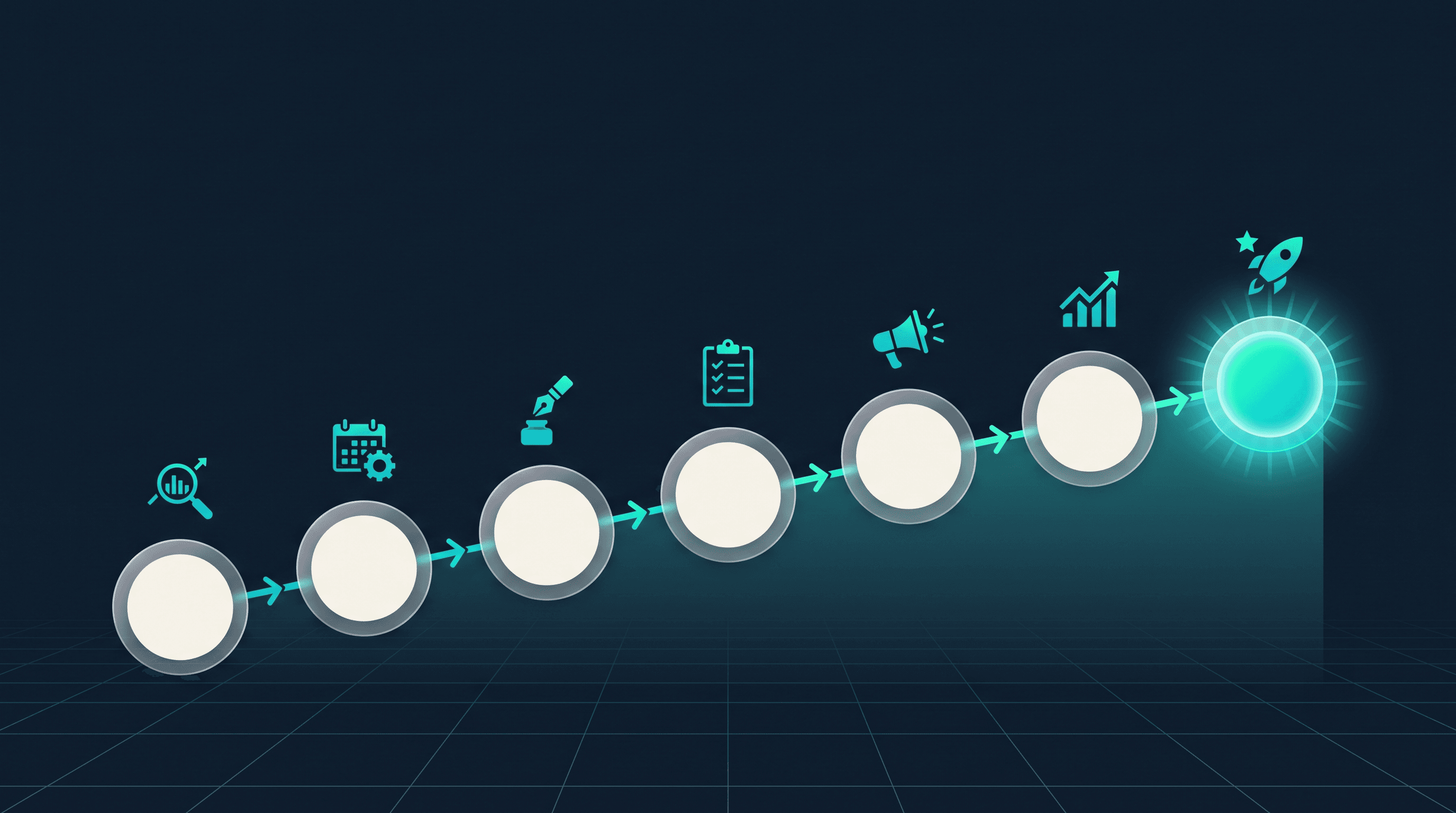
Diversification fails when teams treat it as a big-bang re-platforming instead of a phased transition. You don't tear down the account that pays the bills. You de-risk it in sequence, funding each phase with the efficiency gains of the last. This roadmap moves a concentrated program toward a resilient, orchestrated one without a scary quarter.
Phase 1 — Audit the existing mix. Map where budget goes and, more importantly, what job each dollar does. Split spend into demand capture vs. demand creation. Most concentrated accounts discover they're 80%+ harvest with almost no create — the Death Loop, quantified. You can't fix concentration you haven't measured.
Phase 2 — Identify concentration risk. Name the single points of failure explicitly. What share of new customers depends on one platform? One campaign type? One audience? Quantify the exposure the way you'd quantify supplier or customer concentration — because it's the same class of risk.
Phase 3 — Repurpose proven creative. Before any new platform, take your validated winners and prepare them for adaptation. This is the cheapest possible input to diversification and the fastest path to a real signal — you're testing channels with messages you already know convert.
Phase 4 — Expand into adjacent platforms. Move into new channels as experiments, not commitments — the Experiment First discipline. Start with channels adjacent to where you already win, using repurposed creative, watching for a clear signal before scaling. Prove the role a channel plays before you fund it like it's proven.
Phase 5 — Build owned audience assets. In parallel, stand up the capture and nurture infrastructure: newsletter, resource center, lead magnets, CRM hygiene. This is what converts paid attention into compounding owned assets — the step that turns the whole program from renting to owning. Without it, diversification just spreads the Death Loop across more platforms.
Phase 6 — Standardize measurement. Before scaling, fix the scoreboard, or you'll scale the wrong things. Put role-appropriate metrics and cross-channel measurement in place so demand-creation and education channels are judged on their actual jobs, not on last-click ROAS they were never built to win.
Phase 7 — Scale winning combinations. Now scale — but scale combinations (channel + role + message + owned-asset capture), not isolated campaigns. You're pouring budget into an orchestrated system with proven interactions, not gambling on individual line items.
The sequencing is the point. Measurement (Phase 6) comes before scaling (Phase 7) deliberately: scaling on a broken scoreboard just amplifies the Death Loop faster. Owned-asset development (Phase 5) runs in parallel with expansion (Phase 4) so you're capturing the audiences you're paying to reach from day one, not retrofitting capture after the spend is gone.
Which puts measurement at the center — because a diversified system judged by concentrated-era metrics gets dismantled by its own dashboards.
Measuring What Actually Matters

Here is the trap that kills more diversification efforts than any budget constraint: you build a sophisticated, orchestrated, multi-role media system and then evaluate it with last-click ROAS. Measured that way, every channel except demand capture looks like a failure, and the org rationally defunds them — straight back into the Death Loop. Your measurement model will destroy your strategy if it's a generation behind it.
Moving beyond ROAS-alone doesn't mean abandoning efficiency metrics. It means adding the signals that reveal whether the system is working — leading indicators of demand created and audiences owned, not just demand harvested.
Signals that show the system is compounding:
- Branded search growth. When demand-creation and education channels work, more people search for you by name. Rising branded search volume is one of the clearest proofs that upper-funnel spend — invisible to last-click — is generating real demand.
- Direct traffic. People arriving without a paid click means brand awareness is doing work you're no longer paying per-visit for.
- First-party audience growth. The size of your owned, addressable audience — the asset that makes future acquisition cheaper. If this isn't growing, you're renting, not building.
- Email subscribers. The most direct measure of captured intent and durable owned reach.
- Returning visitors. Evidence that you're developing relationships, not just buying one-time clicks.
- Assisted conversions. Where you see the contribution of channels that influence but don't close — the demand creation and education roles last-click erases.
Methods that measure the system honestly:
- Incrementality testing. The gold standard for the real question: would this conversion have happened without the ad? It exposes the retargeting and branded-search inflation that makes the Death Loop look efficient, and it's the only way to know a channel is adding customers rather than taking credit for them.
- Marketing Mix Modeling (MMM). A top-down, privacy-durable read on how channels contribute to outcomes over time. As signal loss degrades user-level tracking, MMM becomes essential for evaluating a diversified mix — and it doesn't depend on cookies.
- Multi-touch attribution (MTA). Useful for understanding journey interactions across touchpoints, best used alongside MMM and incrementality rather than as the single source of truth it was never reliable as.
- Customer Lifetime Value (LTV). The number that reframes everything. Judged on first-purchase ROAS, many channels and retention efforts look weak; judged on LTV, they're the most profitable spend you have. LTV is what determines how much you can actually afford to acquire — and therefore how aggressively you can diversify.
The governing principle: evaluate performance across the customer journey, not at individual touchpoints. Established marketing research — the long-running work on balancing short-term sales activation against long-term brand building, often associated with Binet and Field, and echoed across Harvard Business Review coverage of brand-versus-performance investment — consistently points the same direction. Optimizing exclusively for immediate conversion maximizes short-term efficiency and erodes long-term effectiveness. The most durable growth comes from balancing activation that captures demand now with brand and audience investment that creates demand for later. A measurement model that only sees the first half will always recommend cutting the second — which is the Death Loop wearing the mask of discipline.
Common Mistakes
Even teams that buy the strategy fall into the same traps. Each one is a specific manifestation of the core error — treating paid media as isolated campaigns instead of an interconnected system.
Treating every campaign like a sales campaign. Not every campaign's job is to convert now. Demand-creation and education campaigns build the pipeline that capture campaigns close. Demanding immediate conversion from every dollar guarantees you defund everything except harvesting.
Judging awareness campaigns on ROAS. The single most expensive measurement mistake. An awareness campaign evaluated on last-click ROAS will always look like a failure and always get cut — killing the demand engine that feeds the channels you kept.
Creating platform-specific silos. When each channel is planned, run, and measured in isolation, you lose the orchestration that makes the system compound. Channels should hand off to each other — creation feeds capture, capture feeds nurture — not operate as disconnected accounts.
Launching new creative instead of repurposing winners. Constantly producing net-new assets is slow, expensive, and needlessly risky. You already have validated messages. Repurpose proven winners into native formats before you commission anything new.
Measuring only last-click attribution. Last-click credits the final touchpoint and erases everything that created the demand. Run your strategy on it and you'll systematically over-invest in harvesting and starve creation — the Death Loop as a reporting default.
Neglecting owned audience growth. If paid media isn't building email lists, CRM records, and communities, you're renting your entire audience in perpetuity at rising prices. Owned assets are what make acquisition cheaper over time. Skip them and efficiency can only decay.
Confusing efficiency with effectiveness. The deepest error, and the one that contains all the others. Efficiency is doing things cheaply; effectiveness is doing the right things. A maximally efficient Death Loop is highly effective at the wrong goal — harvesting a shrinking pool — while the business quietly loses the ability to grow. Efficiency without effectiveness is just a faster path to the ceiling.
Conclusion
The two-platform, direct-response playbook isn't wrong so much as incomplete — and its incompleteness compounds. Optimize only for immediate conversion and you enter the Death Loop: narrowing audiences, rising costs, mounting platform dependence, and dashboards that look healthy right up until they don't. The efficiency is real. So is the ceiling it builds.
Sustainable paid media growth comes from treating it as a system, not a collection of campaigns:
- Diversification removes the single points of failure that make a concentrated account fragile.
- Experimentation lets you expand on evidence and learning velocity instead of expensive guesses.
- Content reuse turns validated creative into cross-platform reach at a fraction of the cost.
- Owned audience development converts rented attention into assets that make every future campaign cheaper.
- Cross-platform orchestration assigns each channel a job and compounds their combined output.
- Long-term intent generation builds demand instead of only harvesting it.
The shift is from running campaigns to building a growth engine — where diversification manages risk, every channel has a role, and every campaign leaves behind assets that strengthen the next one. That is the difference between a paid media program that decays under its own optimization and one that compounds. Diversify, or watch efficiency slowly become the thing that kills your growth.